Most Decatur city water homeowners don't need a water softener
Decatur Utilities draws from the Tennessee River and delivers water at 5.5–6 GPG hardness — moderately soft. At this level, you won't see meaningful scale buildup, your appliances aren't at risk, and soap lathers normally. Spending $800–$6,000 on a softener for Decatur city water solves a problem you don't have.
What Decatur homeowners DO need: filtration for industrial contamination
Decatur's Tennessee River source carries documented industrial contamination — PFAS, 1,4-Dioxane, and heavy metals from upstream manufacturing. A softener does nothing for these. A whole-house filter and an under-sink RO system are what actually improve Decatur water quality.
Decatur Water by the Numbers
Decatur Utilities — 2026 Water Profile
Decatur vs Huntsville — Why Treatment Is Different
If a dealer runs a water test in your Decatur home and recommends a softener, ask them to show you the hardness result number in GPG. If it reads below 7 GPG, you're looking at unnecessary equipment.
What Decatur Homeowners Actually Need
Two-layer approach: whole-house filtration at point of entry for industrial contaminants, plus reverse osmosis at the drinking tap for PFAS.
Layer 1 — Whole-House Filter for Industrial Contaminants
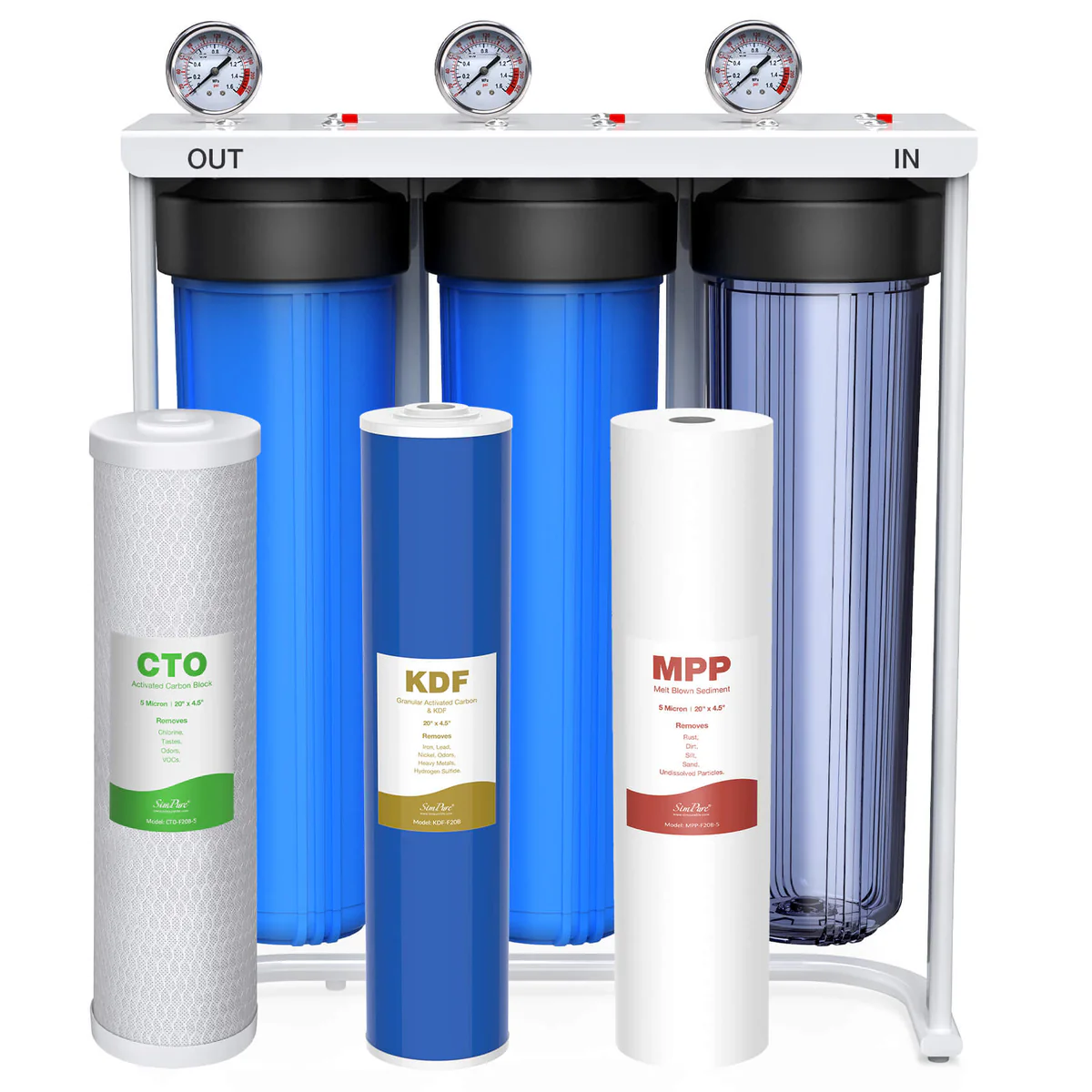
SimPure DB20P-3KDF — 3-Stage KDF Whole-House Filter
KDF media removes iron, lead, nickel, chromium, and heavy metals through redox — the right approach for Tennessee River industrial runoff. Standard carbon filters don't do this. CTO carbon stage handles chlorine and VOCs. Three individual pressure gauges for per-stage monitoring.
Shop SimPure DB20P-3KDF →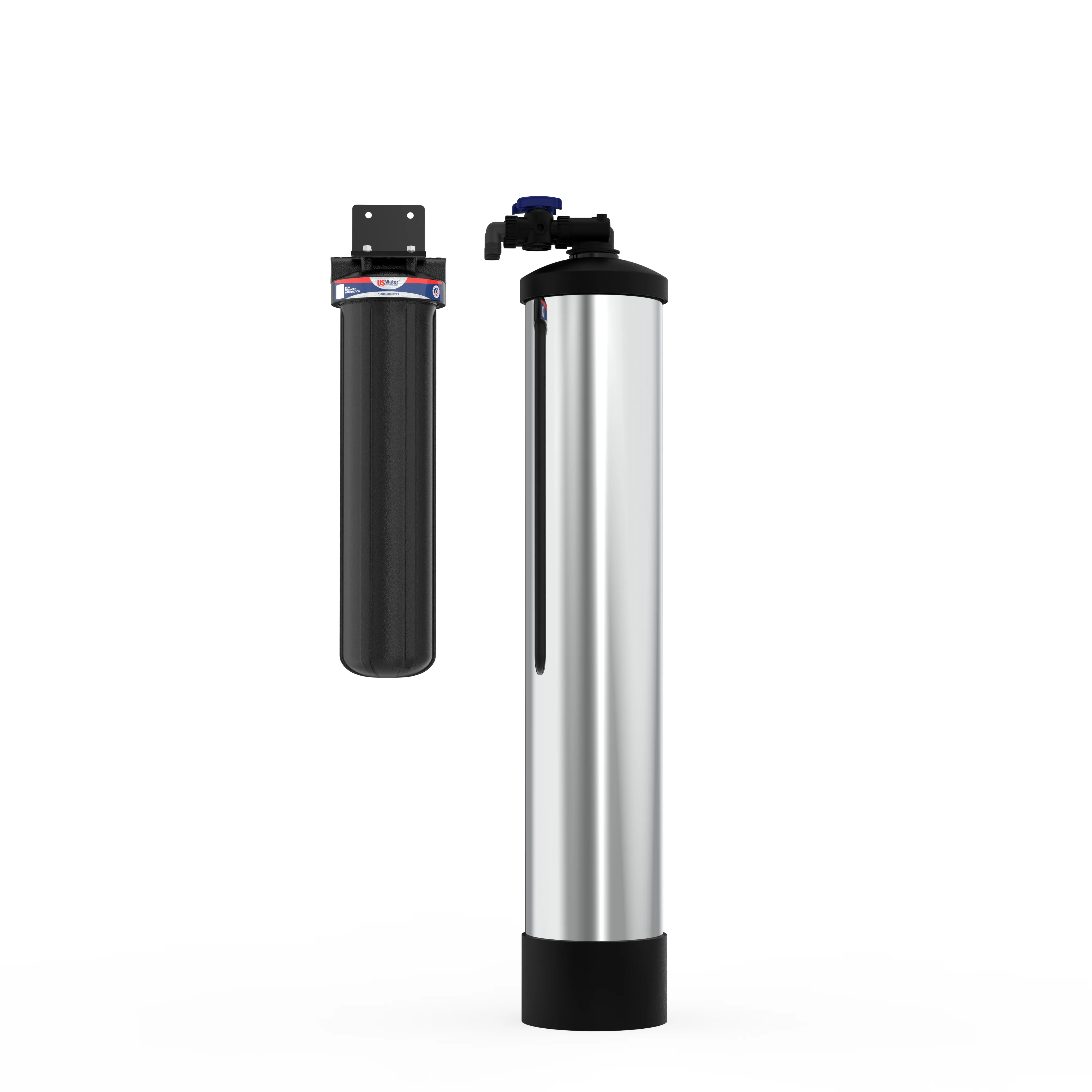
US Water Systems BodyGuard Plus
Premium catalytic carbon whole-house filter. Removes chloramine, pesticides, VOCs, lead, bacteria, and cysts. No electricity, no wastewater. Broader coverage than the SimPure for homeowners wanting maximum protection.
Shop BodyGuard Plus →Layer 2 — Under-Sink RO for PFAS at the Drinking Tap
KDF and carbon filters reduce industrial contaminants and chloramine, but they do not remove PFAS. An under-sink reverse osmosis system is required for PFAS removal at the drinking water level. The 2026 Sierra Club report found PFAS in 88% of Alabama surface water.
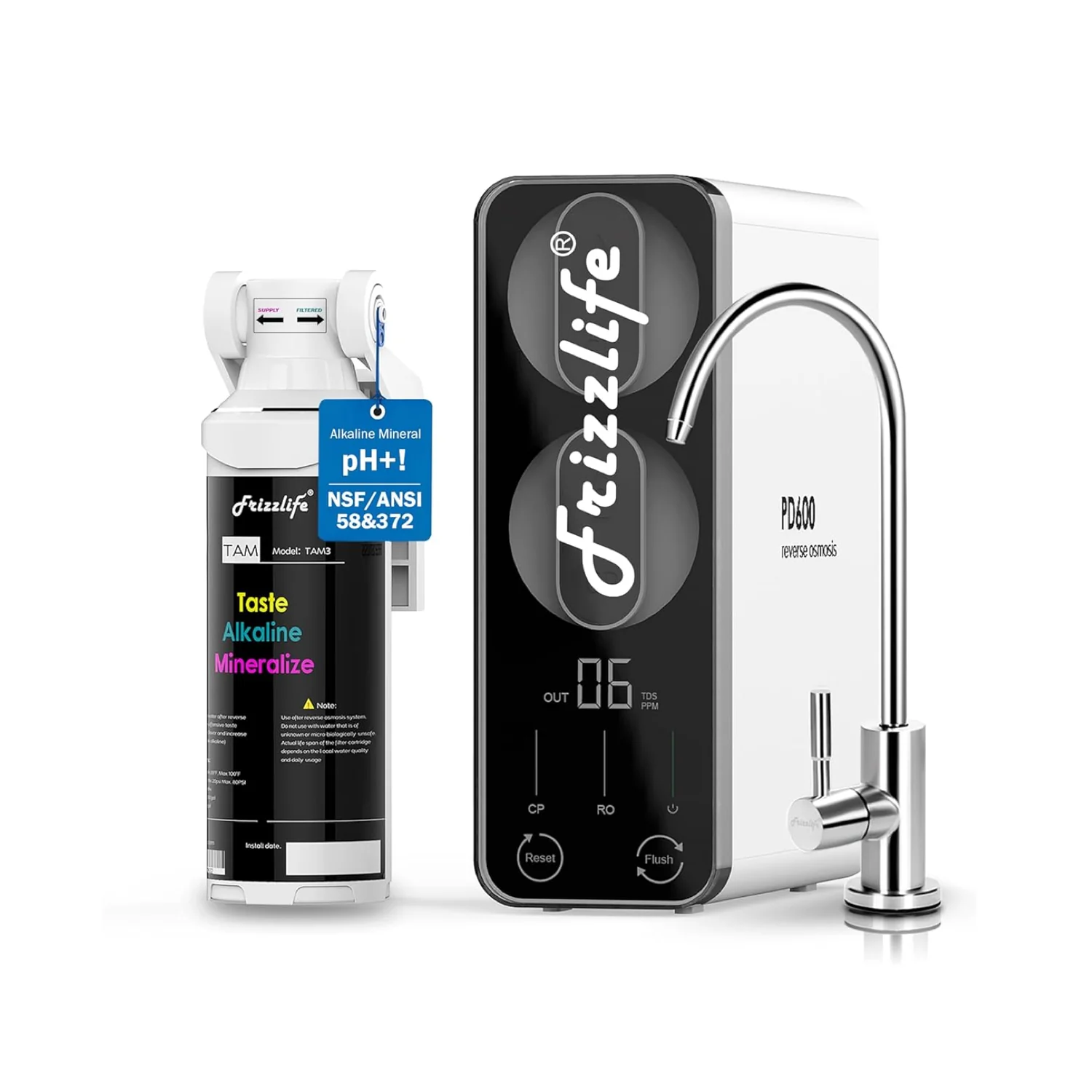
Frizzlife PD600 TAM3 — Tankless RO + Alkaline
600 GPD tankless RO with real-time TDS display. Removes PFAS through the RO membrane and handles chloramine in the pre-filter. TAM3 alkaline filter adds minerals back. NSF/ANSI 58 & 372 certified. At Decatur's lower incoming TDS, the membrane produces very pure output.
Shop Frizzlife PD600 TAM3 →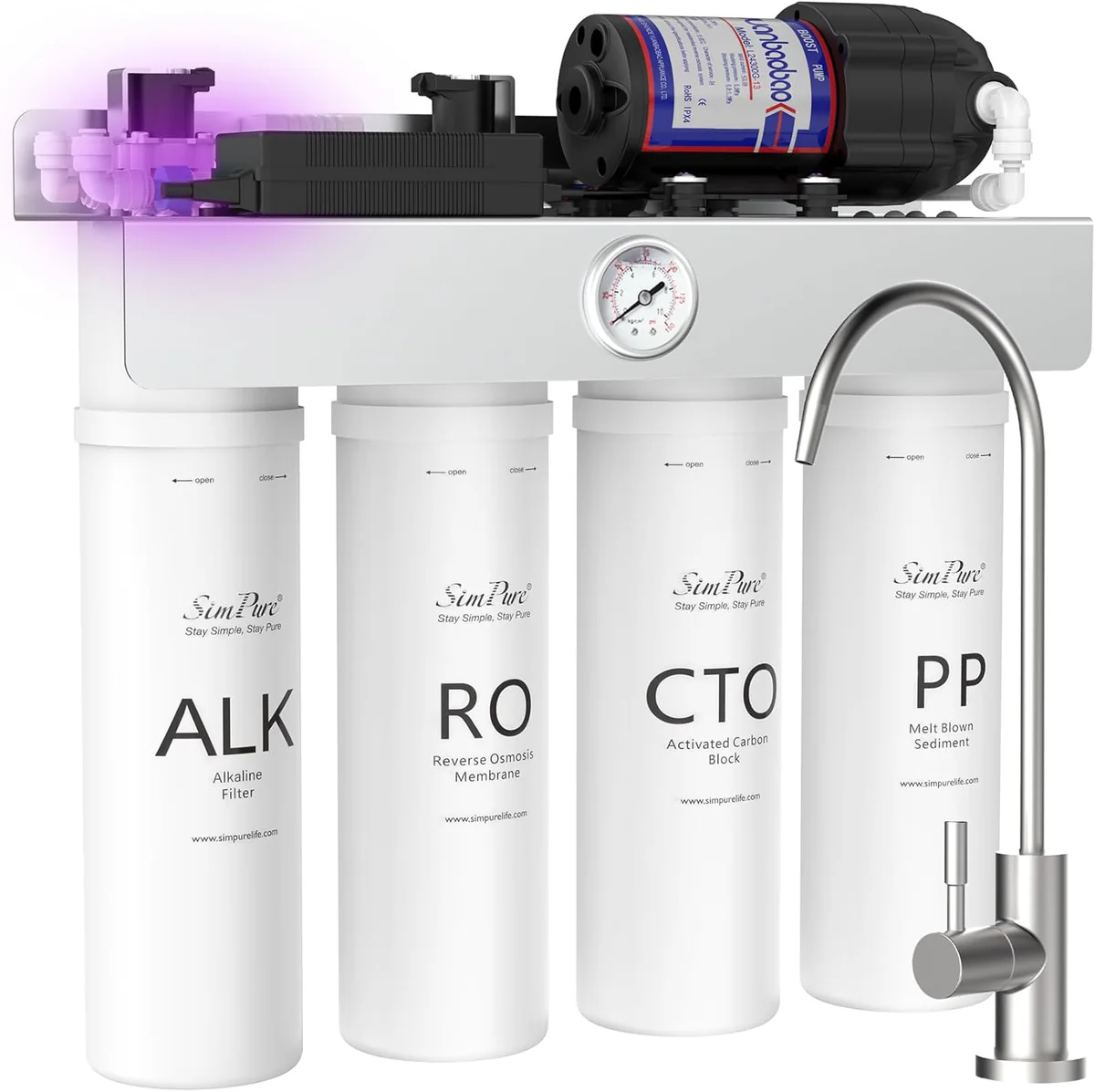
SimPure T1-400ALK — 8-Stage RO with UV
Adds UV purification to the RO membrane — useful if bacterial contamination from the Tennessee River is a concern. NSF/ANSI 58 certified. Removes PFAS, 1,4-Dioxane (partially), chloramine, lead, and arsenic.
Shop SimPure T1-400ALK →Exception: Morgan County Well Water Users
Rural Morgan County groundwater can range from 10–15 GPG — moderately hard. If you see scale on faucets, dry skin, or soap that won't lather, test your water first. A $30–$50 test kit will confirm your actual hardness level before any purchase.
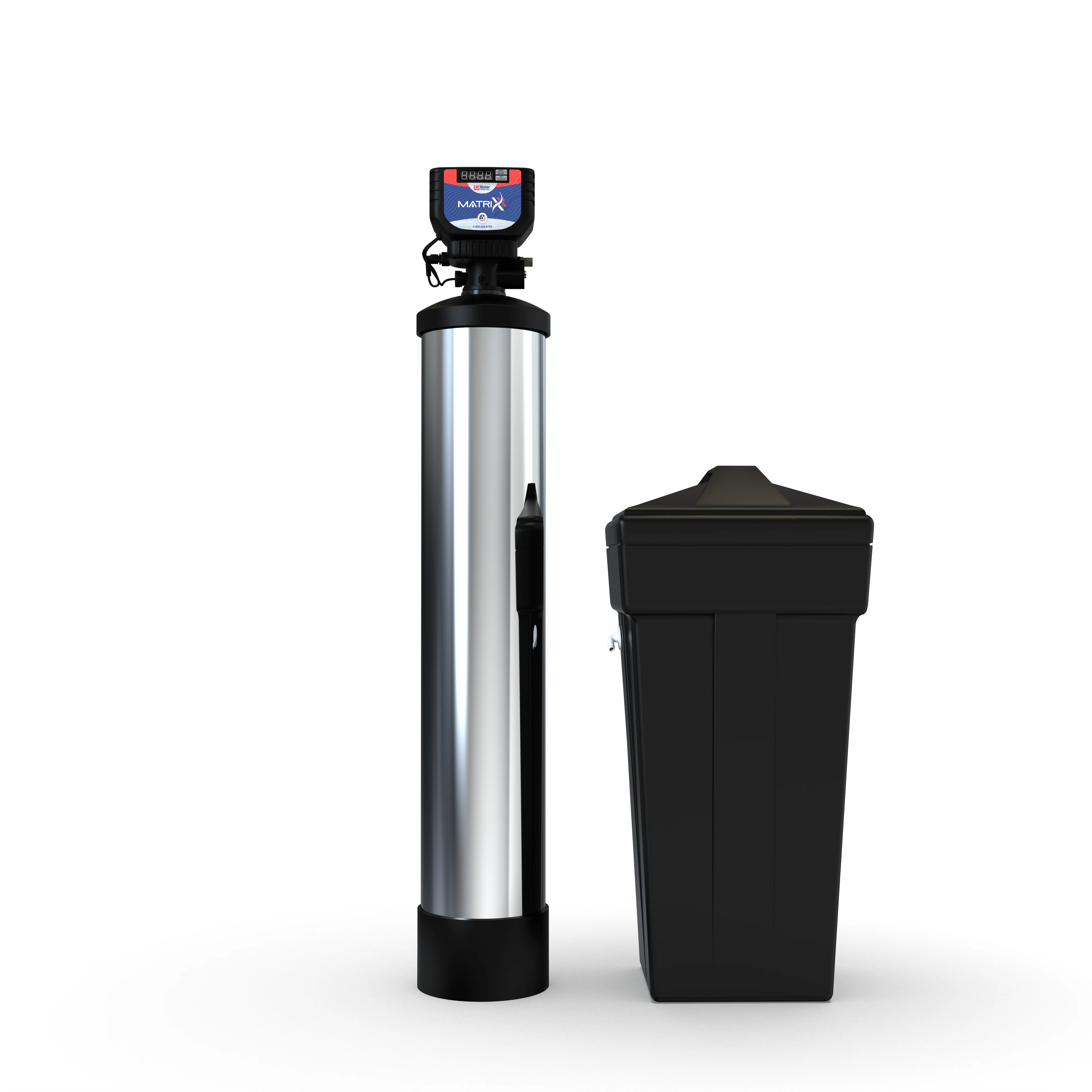
US Water Systems Matrixx Smart — For 10–15 GPG Well Water
If your Morgan County well tests above 10 GPG, the Matrixx Smart is the factory-direct alternative to dealer quotes. 10% cross-linked resin, Bluetooth app, WQA certified. Factory-direct pricing saves $2,000–$4,000 vs dealer installation.
Shop Matrixx Smart →Should You Call RainSoft or Culligan in Decatur?
| Option | Decatur City Water | Morgan Co. Well Water |
|---|---|---|
| Dealer softener | Not recommended — water already soft | Valid if well tests 10+ GPG, but overpriced |
| Factory-direct softener | Still not needed for city water | Best value if well is 10–15 GPG |
| KDF whole-house filter | Right choice for industrial contamination | Good addition for well water too |
| Under-sink RO | Essential for PFAS removal | Essential — well water + PFAS risk |
For most Decatur homeowners on city water: skip the softener entirely, install the SimPure DB20P-3KDF on your main line for industrial contaminant protection, and add a Frizzlife PD600 TAM3 or SimPure T1-400ALK under the kitchen sink for PFAS. Total cost: $700–$900 for both systems — a fraction of what a dealer softener would run.
Frequently Asked Questions
Does Decatur Alabama have hard water?
No. Decatur Utilities delivers water at 5.5–6 GPG — moderately soft. Dramatically softer than Madison County wells (15–32 GPG). Decatur city water does not need a softener.
Do I need a water softener in Decatur AL?
Probably not, if you're on Decatur city water. At 5.5–6 GPG, a softener adds little benefit. The exception is private well users in rural Morgan County where groundwater can reach 10–15 GPG. For city water, invest in filtration for PFAS and industrial contaminants instead.
What contaminants are in Decatur Alabama water?
Decatur draws from the Tennessee River, which carries PFAS from upstream industrial manufacturing, 1,4-Dioxane from industrial discharge, aluminum from water treatment, and chlorine disinfection. The 2026 Sierra Club report found PFAS in 88% of Alabama surface water.
What water filter does Decatur AL need?
Two systems: (1) SimPure DB20P-3KDF whole-house KDF filter for heavy metals and industrial contaminants, and (2) Frizzlife PD600 TAM3 or SimPure T1-400ALK under-sink RO for PFAS removal at the drinking tap.
Is Decatur AL water safe to drink?
Decatur Utilities meets all current legal standards. However, PFAS has been detected in the Tennessee River source water. The EPA's new 4 ppt MCL means many surface water systems now technically exceed the limit. Filtered drinking water is recommended.
See our full Best Water Filters for Decatur, Alabama guide or use the North Alabama water diagnostic for county-specific recommendations.
Disclosure: North Alabama Water Guide earns a commission on purchases through links on this page. See our full affiliate disclosure.