Affiliate Disclosure: We earn small commissions on purchases through links in this article at no extra cost to you. Our recommendations are fully independent. Full disclosure →
The short answer: Huntsville's tap water meets current federal legal standards — but it exceeds the EPA's new health-protective PFAS limit, and "legal" doesn't always mean "optimal for your family's health." Here's the full picture.
What the 2026 Data Actually Shows
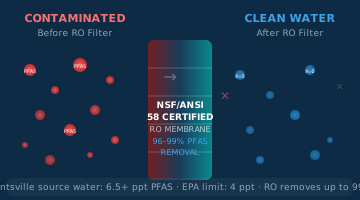
Huntsville Utilities draws from the Tennessee River and treats it at the Lincoln/Dallas Water Treatment Plant. The February 2026 Sierra Club surface water testing found PFAS at 6.5+ parts per trillion (ppt) at this source — above the EPA's new Maximum Contaminant Level of 4 ppt for PFOA and PFOS. Huntsville Utilities' own 2025 Consumer Confidence Report confirms total PFAS at 22.5 ppt, with PFOS reaching 7.6 ppt and PFOA reaching 4.2 ppt — both above the EPA limit.
Important context: Water utilities have until 2029 to comply with the new 4 ppt PFAS standard. So Huntsville Utilities is not currently violating the law — but the water does exceed the health-protective level the EPA has now set. This is not a boil-water advisory situation. It is a reason to consider additional home filtration for drinking water.
2026 Huntsville Water Report Card
The 4 Specific Issues with Huntsville Water
1. PFAS Above the EPA Health Limit
As noted above, PFAS at 22.5 ppt exceeds the EPA's 4 ppt MCL. PFAS exposure has been linked to thyroid disease, elevated cholesterol, reduced vaccine effectiveness in children, and certain cancers with long-term exposure. The good news: an NSF/ANSI 58-certified reverse osmosis system removes 94–99% of PFAS at the drinking tap.
2. Chloramine Disinfection (Not Chlorine)
Huntsville Utilities switched from chlorine to chloramine in 2021. Chloramine is harder to remove than chlorine — standard pitcher filters and basic carbon filters are not effective. You need catalytic carbon media. This also matters for aquarium owners, as chloramine is highly toxic to fish and does not off-gas like chlorine.
3. Extreme Hardness (4.7 GPG)
Huntsville water is more than 4 times harder than the U.S. average. This isn't a health concern — calcium and magnesium are minerals your body uses — but it causes significant damage to water heaters, appliances, pipes, skin, and hair. A water softener addresses hardness; an RO system does not.
4. Trihalomethanes (TTHMs)
TTHMs are disinfection byproducts that form when chloramine reacts with organic matter. Huntsville's Consumer Confidence Report has historically shown TTHMs within legal limits, but elevated levels are worth noting for pregnant women and infants.
What Should You Actually Do?
Based on the data, here's what we recommend for Huntsville families in priority order:
- For drinking and cooking water: Install an NSF/ANSI 58-certified under-sink reverse osmosis system. This addresses PFAS, TTHMs, and chloramine at the drinking tap. The Aquasana OptimH2O is our top pick for Huntsville specifically because it's certified for both PFAS and chloramine removal.
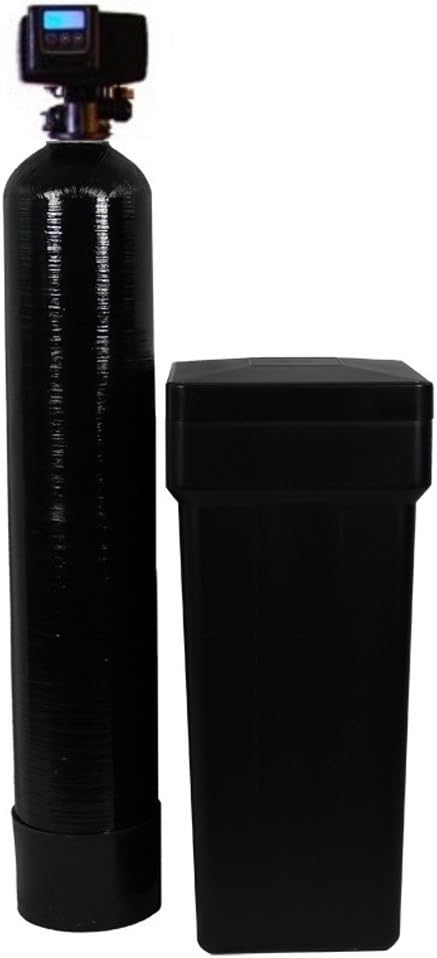
- For whole-home protection: A water softener to address the 4.7 GPG hardness. This protects your appliances, pipes, skin, and laundry.
- For shower and bathing: A whole-home catalytic carbon filter reduces chloramine throughout the house — important since chloramine can absorb through skin and off-gas in shower steam.
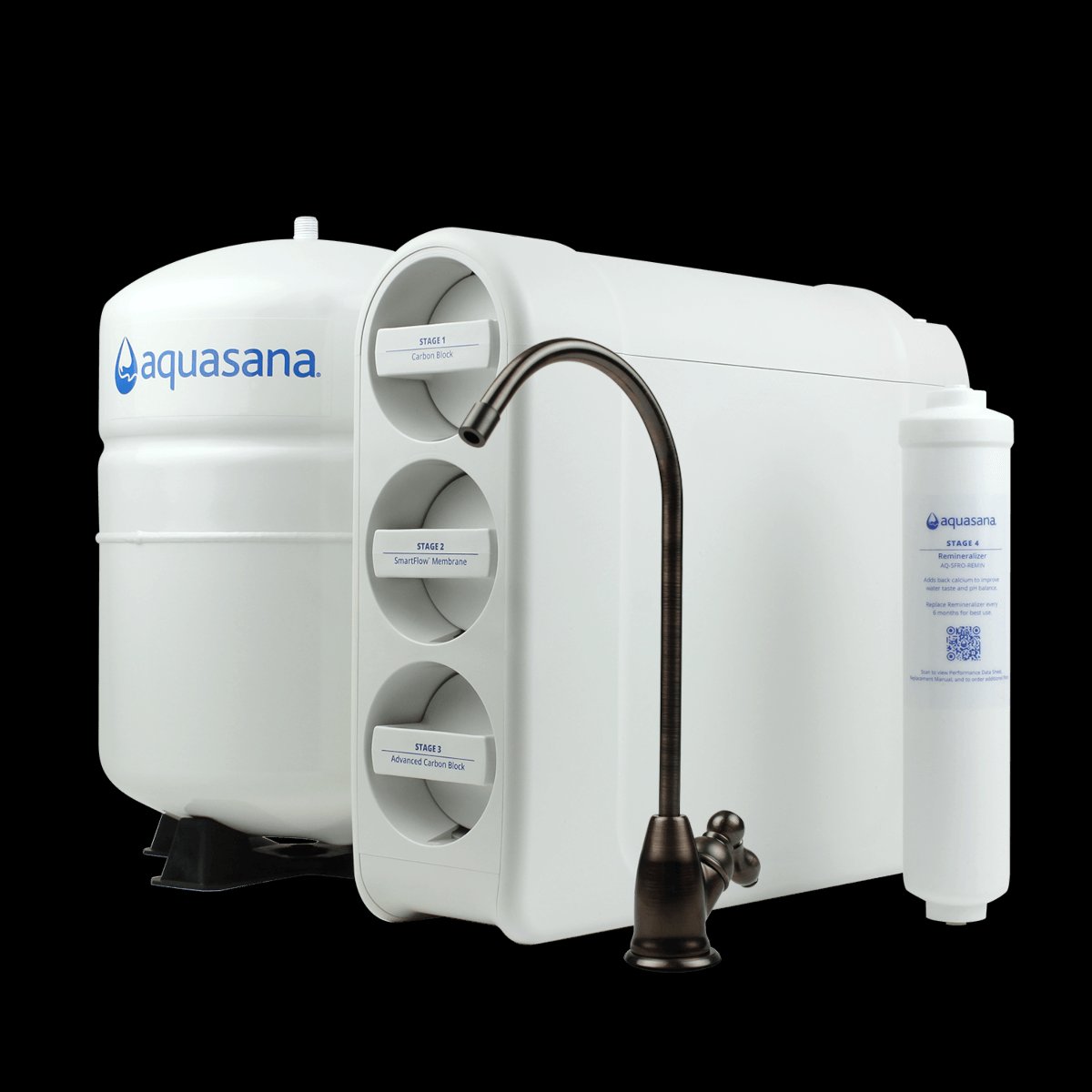 🚰 Aquasana OptimH2O RO — Best for Huntsville PFAS (affiliate)
Is It Safe Enough to Drink Without Filtering?
For healthy adults, drinking Huntsville tap water without a filter is unlikely to cause acute harm. The PFAS levels, while above the new EPA limit, represent a long-term cumulative exposure concern rather than an immediate danger. However, we recommend additional filtration — particularly an RO system — for:
- Pregnant women and nursing mothers
- Infants and young children
- Anyone with thyroid disease, elevated cholesterol, or compromised immune function
- Homes within 5 miles of Redstone Arsenal (where PFAS may be elevated further)