Huntsville: 17–18.2 GPG hardness · Chloramine since 2021 · PFAS at 6.5+ ppt (above the EPA's 4 ppt limit)
Madison County wells: 15–32 GPG · Moderate PFAS risk near Redstone Arsenal
Decatur: 5.5–6 GPG (soft) · Industrial PFAS + 1,4-Dioxane contamination from Tennessee River
SimPure has been making water filtration systems since 2006 out of Seattle. They're not the most well-known brand in the water treatment space, but they've carved out a real niche: NSF-certified RO systems at significantly lower prices than Aquasana, Waterdrop, or US Water Systems — without cutting corners on what actually matters for filtration performance.
For North Alabama homeowners facing documented PFAS contamination, chloramine-treated city water, and extreme hardness, SimPure's lineup has genuine answers at multiple price points. Here's the honest breakdown of their four most relevant products.
Quick-Match Guide — Which SimPure Is Right for You?
🏠 Huntsville homeowner (city water)
PFAS + chloramine + hard water → T1-400ALK for drinking water, pair with a softener for whole-house hardness
🏢 Huntsville renter / apartment
Can't drill or modify plumbing → Y7P Countertop RO — plug in, no installation, full PFAS removal
💰 Budget-conscious homeowner
Want RO without the tankless price tag → T1 6-Stage — no electricity required, alkaline remineralization, lower cost
🏭 Decatur or Morgan County
Soft water but industrial contamination → DB20P-3KDF Whole House — KDF media removes heavy metals + chloramine sitewide
SimPure Products — Full Reviews
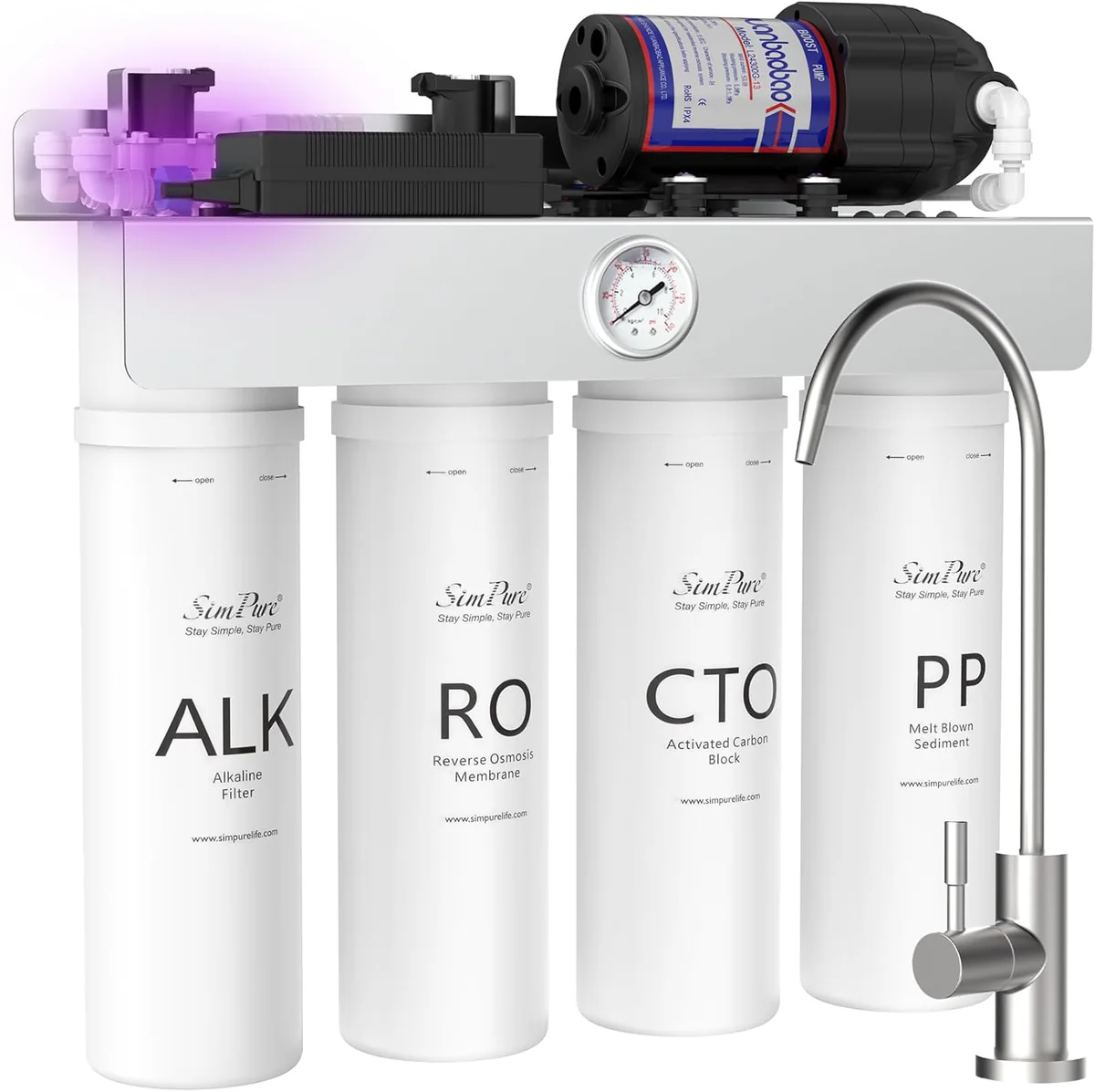
The T1-400ALK is SimPure's flagship under-sink RO — and the one that makes the most sense for Huntsville homeowners dealing with both PFAS and chloramine. Here's why each stage matters locally:
- PP sediment filter — removes rust, dirt, and sediment. Protects all downstream stages.
- CTO activated carbon block — specifically removes chloramine. This is the stage most competitors skip or underbuild. Huntsville switched to chloramine in 2021 and standard carbon won't touch it — the CTO block in the T1-400ALK is rated for it.
- 0.0001-micron RO membrane — removes PFAS (PFOA/PFOS), lead, arsenic, fluoride, TDS, and over 1,000 other contaminants. Huntsville's documented 6.5+ ppt PFAS gets reduced to near-zero at this membrane.
- UV purification stage — destroys 99.99% of bacteria and viruses. Especially relevant for well water connections or homes near agricultural runoff in Limestone or Marshall County.
- ALK alkaline remineralization — adds calcium, magnesium, and potassium back into the RO-purified water. Raises pH to 7.5–9. North Alabama's hard water tastes flat when fully stripped by RO — the alkaline stage fixes that while restoring beneficial minerals.
- Tankless design — no storage tank needed. Water dispenses on demand at 400 GPD, meaning you won't run out during heavy cooking or if you fill pitchers frequently.
✓ Pros
- NSF/ANSI 58 certified — independently verified
- Removes PFAS, chloramine, lead, fluoride, arsenic
- UV stage handles bacteria and viruses
- Alkaline remineralization — better taste, restored minerals
- Tankless — never runs out, no bulky tank
- Pressure gauge — you can see system performance
- Strong price-to-performance ratio
✗ Cons
- Under-sink only — filters drinking water, not whole house
- Requires electricity for pump and UV
- Does not soften water (separate softener still needed for hardness)
- Installation takes 1–2 hours with basic plumbing skills
Lawrence's take: For Huntsville city water, this is the most complete under-sink RO at this price. The CTO chloramine stage and UV are the differentiators — most RO systems at this price point skip one or both. The pressure gauge is a nice touch; you can monitor performance without guessing. Add a Matrixx or Fleck softener on the main line and your water is handled top to bottom.
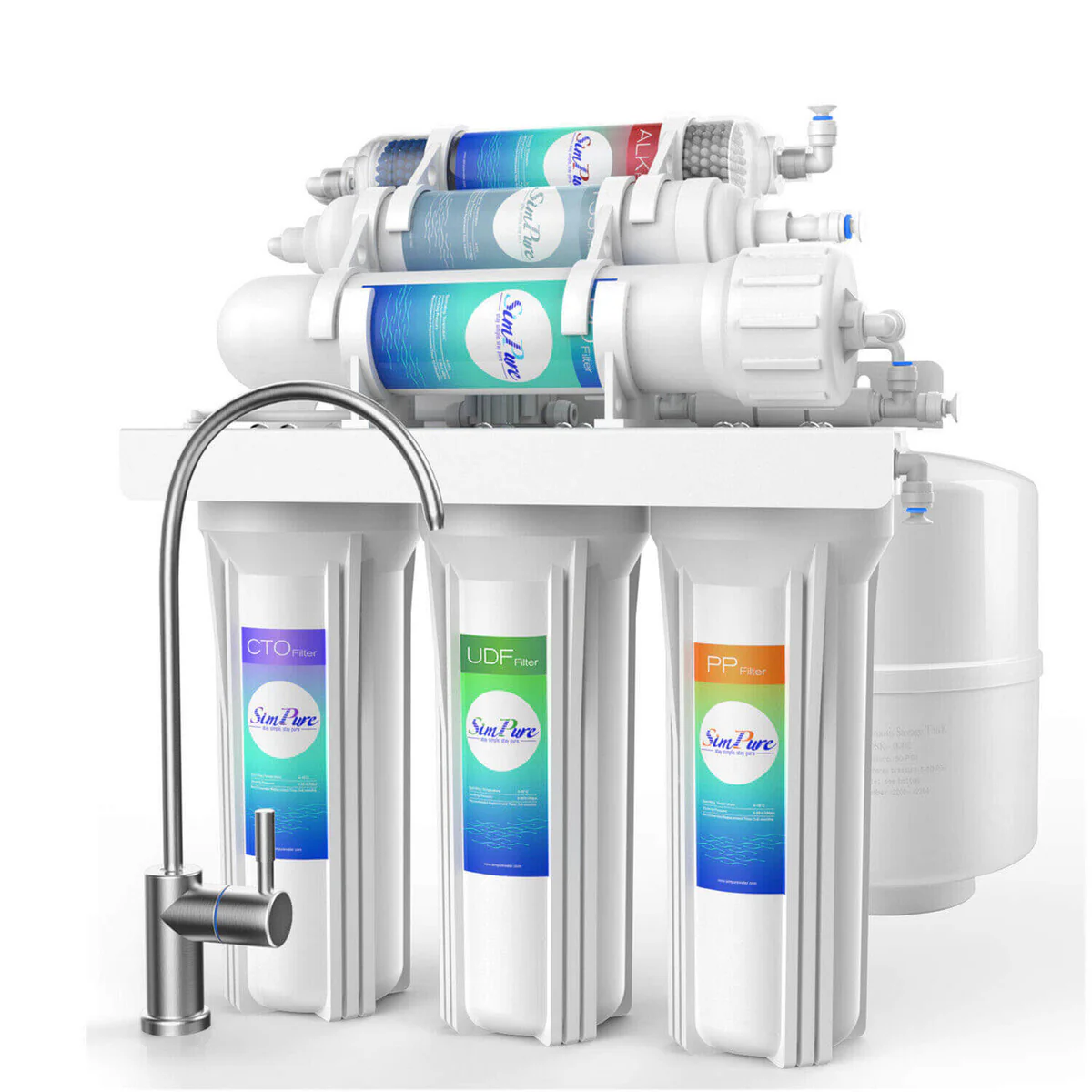
The T1 6-Stage is the traditional tank-style RO — the setup most people picture when they think "under-sink water filter." It uses a storage tank that holds purified water ready to dispense, no electricity required, and includes the same alkaline remineralization stage as the T1-400ALK.
For North Alabama, the key differentiator from the T1-400ALK is simple: no electricity needed. Well water homes on pump systems, or anyone who wants to minimize electrical load under the sink, this is the cleaner option. The trade-off is flow rate — you're drawing from the tank rather than filtering on demand.
- 6-stage filtration — PP sediment → UDF granular carbon → CTO chloramine block → RO membrane → post-carbon → ALK alkaline remineralization. Covers every contaminant concern for Huntsville and surrounding areas.
- 1.5:1 drain ratio — produces 1 gallon of purified water for every 1.5 gallons used. That's far more efficient than older RO systems (which often run 3:1 or worse).
- No electricity — purely water-pressure driven. No pump, no wiring, no operating cost beyond filter replacements.
- 12-month filter life — longer replacement cycle than many competitors, which keeps annual maintenance costs down.
✓ Pros
- No electricity required — lower operating cost
- Efficient 1.5:1 drain ratio
- Alkaline remineralization included
- CTO stage handles Huntsville's chloramine
- 12-month filter life reduces maintenance
- Lower upfront cost than tankless models
✗ Cons
- Storage tank takes up cabinet space
- Slower flow rate than tankless systems
- Tank can run low during high-use periods
- No UV stage (unlike T1-400ALK)
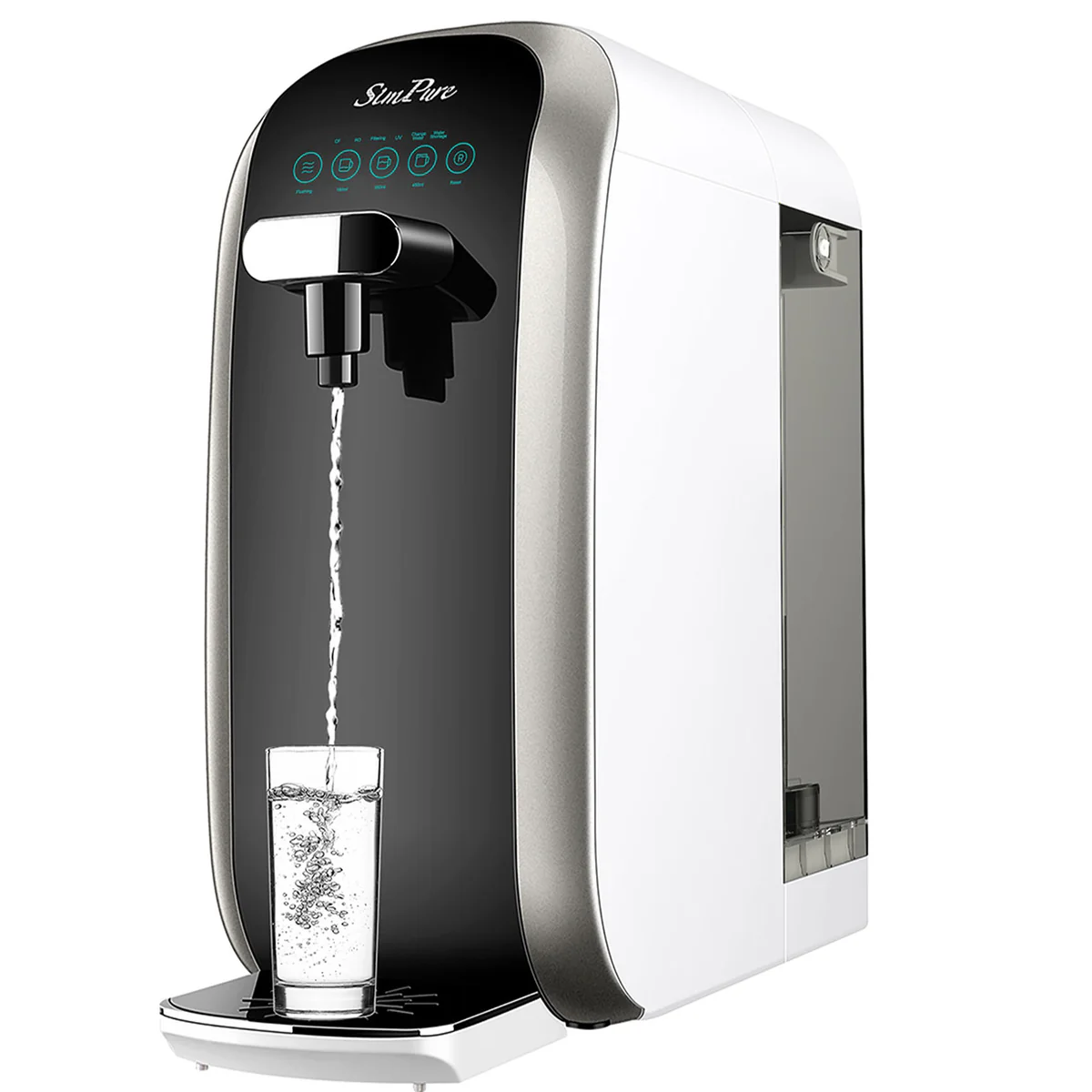
Huntsville has a large renter population — downtown, Bridge Street, Research Park apartments, Madison apartments. Most landlords won't allow under-sink modifications. The Y7P sits on your countertop, plugs into a standard outlet, and connects to your faucet with a simple adapter. Full RO filtration, zero installation, moves with you when you leave.
- Zero installation — plug into any standard outlet. Connect to your kitchen faucet with the included adapter or fill it manually. No drilling, no plumbing, no landlord permission needed.
- 4-stage RO + UV — removes PFAS (PFOA/PFOS), lead, chloramine, arsenic, bacteria, and viruses. NSF/ANSI 58 certified and EPA 537 tested specifically for PFAS compounds.
- 4:1 pure-to-drain ratio — efficient water usage. Most countertop RO systems waste more water per gallon produced.
- 418 GPD dispense rate — fast enough to fill a glass in about 15 seconds. Won't have you standing at the counter waiting.
- Digital display — shows filter status, TDS levels, and UV indicator. You can see the system working and know when filters need replacing without guessing.
- Compact footprint — about the size of a large coffee maker. Fits on most apartment counters without taking over the workspace.
✓ Pros
- No installation — perfect for renters
- Removes PFAS, chloramine, lead, bacteria, viruses
- NSF/ANSI 58 + EPA 537 certified
- UV purification included
- Digital display shows real-time performance
- Portable — moves with you
✗ Cons
- Countertop space required
- Requires electricity to operate
- Internal tank is smaller than under-sink systems
- Room-temperature water only (no hot or chilled)
- Not designed for well water with TDS above 500 ppm
Lawrence's take: If you're renting in Huntsville and concerned about the 6.5+ ppt PFAS reading, this is your practical answer. You can't negotiate a plumbing modification into most leases, but you can set this on your counter today. The EPA 537 PFAS certification matters — not all RO systems are tested specifically for PFAS removal.
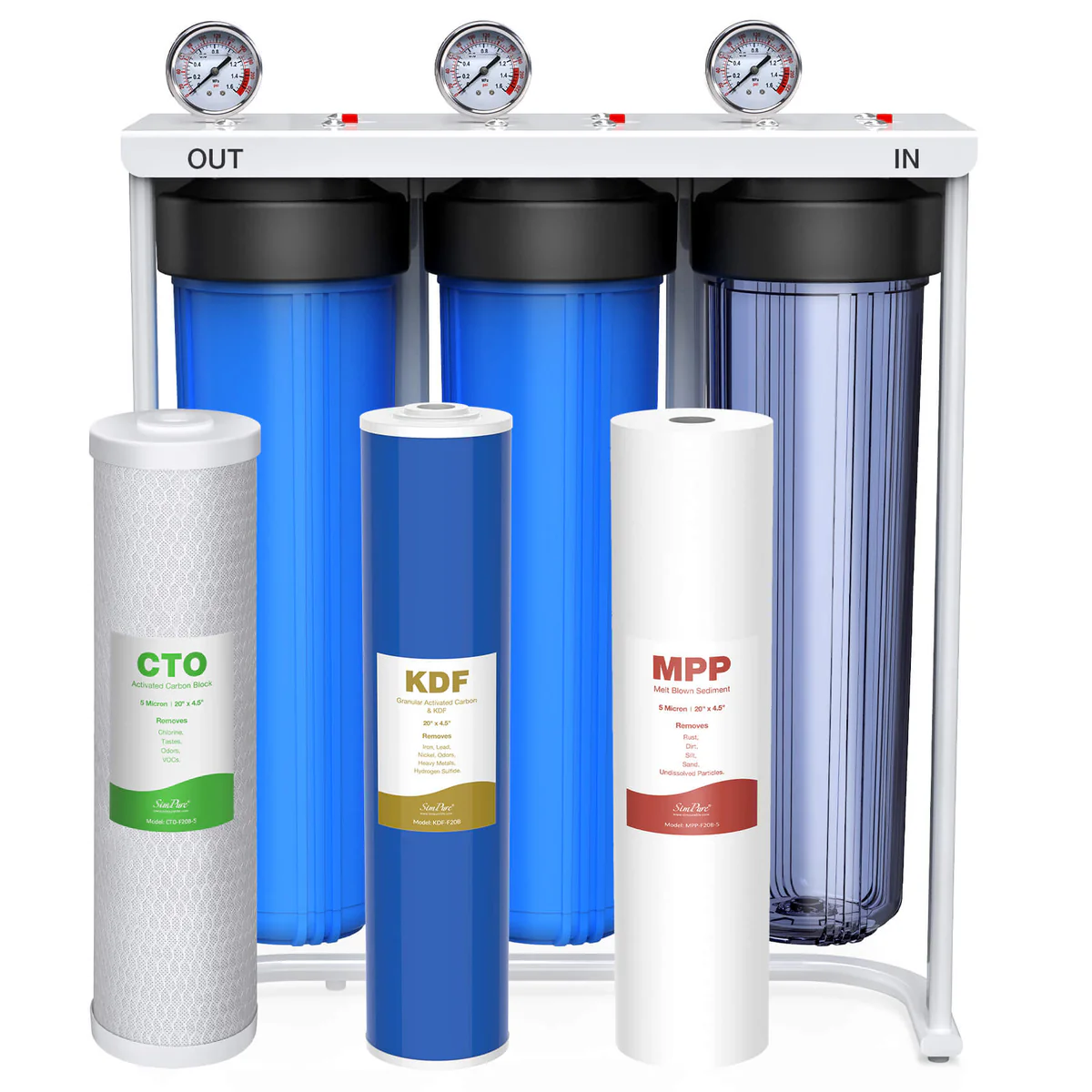
Decatur's water is soft (5.5–6 GPG) — no softener needed. But it has documented industrial contamination: PFAS from chemical manufacturing and 1,4-Dioxane from Tennessee River industrial discharge. A whole-house filter is more important here than a softener. The KDF media in this system specifically targets industrial heavy metals and hydrogen sulfide that are common near industrial water sources.
- KDF (Kinetic Degradation Fluxion) media — the key differentiator. KDF removes iron, lead, nickel, chromium, hydrogen sulfide, and other heavy metals through a redox reaction. This is what you need for industrial contamination near the Tennessee River. Standard carbon filters don't do this.
- CTO activated carbon block — removes chloramine, chlorine, VOCs, and taste/odor. Covers Decatur's disinfectant treatment as well.
- MPP melt-blown sediment filter — removes rust, dirt, sand, and undissolved particles. First stage that protects the KDF and carbon downstream.
- 3 pressure gauges — one per housing. You can monitor pressure drop across each stage individually, which tells you exactly when each filter needs changing. Most whole-house systems give you one gauge or none.
- 20" × 4.5" Big Blue housings — the larger filter size means higher flow rates and longer filter life between changes versus standard 10" housings. Right for a whole-house install.
- No electricity — purely pressure-driven at the point of entry.
✓ Pros
- KDF media removes iron, lead, heavy metals, H₂S
- Treats all water entering the house
- 3 individual pressure gauges — per-stage monitoring
- Big Blue housings — high flow, long filter life
- No electricity — no operating cost
- Good for well water with iron or hydrogen sulfide
✗ Cons
- Does not remove PFAS (add under-sink RO for drinking water)
- Requires plumbing installation on main line
- KDF filters are more expensive to replace than standard carbon
- Does not soften water
Lawrence's take: For Decatur homeowners on city water with industrial contamination concerns, this is the right whole-house foundation. KDF is the correct media choice for heavy metal removal — you won't find it in most off-the-shelf whole-house filters. Add a SimPure T1-400ALK under the kitchen sink for PFAS and you have a complete system at a reasonable combined cost.
SimPure Model Comparison
| Model | Best for | Removes PFAS | Removes Chloramine | Install | Price |
|---|---|---|---|---|---|
| T1-400ALK | Huntsville homeowners | ✓ Yes (RO membrane) | ✓ Yes (CTO stage) | Under-sink DIY | $349.99 |
| T1 6-Stage | Budget homeowners | ✓ Yes | ✓ Yes (CTO stage) | Under-sink DIY | Lower |
| Y7P Countertop | Renters, apartments | ✓ Yes (EPA 537 tested) | ✓ Yes | No install — plug in | Mid-range |
| DB20P-3KDF | Decatur, well water | ✗ No | ✓ Yes (CTO stage) | Main line DIY/plumber | $359.99 |
SimPure vs Aquasana vs iSpring — How Do They Compare?
SimPure sits in an interesting middle ground in the RO market. They're more affordable than Aquasana's OptimH2O ($499+) but more capable than basic Amazon RO kits. Here's how they stack up on the factors that matter for North Alabama:
| Factor | SimPure T1-400ALK | Aquasana OptimH2O | iSpring RCC7AK |
|---|---|---|---|
| Price | $349.99 | $499+ | ~$230 |
| PFAS removal | ✓ Yes | ✓ Yes | Limited |
| Chloramine removal | ✓ CTO stage | ✓ Yes | Partial |
| UV purification | ✓ Included | ✗ No | ✗ No |
| Alkaline remineralization | ✓ Included | ✓ Included | ✓ Included |
| NSF certification | NSF/ANSI 58 | NSF/ANSI 58 + 401 | Limited |
| Tankless design | ✓ Yes | ✓ Yes | ✗ Tank required |
| Countertop option | ✓ Y7P model | ✗ No | ✗ No |
The honest summary: SimPure punches above its price point. The T1-400ALK includes UV and CTO chloramine removal that Aquasana doesn't offer at any price, while costing $150 less. Aquasana edges ahead on NSF certifications (401 covers pharmaceuticals and emerging contaminants). For North Alabama's specific documented problems — PFAS and chloramine — SimPure covers both effectively.
Frequently Asked Questions
Does SimPure remove PFAS from Huntsville water?
Yes. SimPure's RO systems use a 0.0001-micron membrane that removes PFAS (PFOA and PFOS) from drinking water. The T1-400ALK and T1 6-Stage are their most effective under-sink PFAS systems. The Y7P countertop model is EPA 537 tested specifically for PFAS compounds — an important certification distinction.
Is SimPure a trustworthy brand?
SimPure has operated since 2006 from Seattle, WA. Their products carry NSF/ANSI 58 certification (independently verified filtration performance), and they offer US-based customer support. They are a legitimate brand — not a no-name import, though they're less well-known than Aquasana or Waterdrop.
What's the difference between the T1-400ALK and T1 6-Stage?
The T1-400ALK is tankless — it filters water on demand at 400 GPD and requires electricity for its pump and UV light. The T1 6-Stage uses a storage tank, requires no electricity (pressure-driven), and is generally less expensive. The T1-400ALK is better for families with higher water usage; the T1 6-Stage suits smaller households or anyone who prefers no power draw.
Can I use SimPure with Huntsville's hard water?
SimPure RO systems work with Huntsville's 17–18 GPG hardness — the RO membrane handles it, and the ALK stage restores minerals after. However, hard water will shorten RO membrane life over time. If you're on Madison County well water at 20–32 GPG, adding a water softener upstream of the RO significantly extends the membrane's lifespan.
Do SimPure filters need to be replaced often?
The T1 6-Stage has a 12-month filter life on the pre-filters and 2 years on the RO membrane under normal usage. The T1-400ALK's filter schedule is similar. Huntsville's hard water may shorten pre-filter life slightly — expect closer to 6–9 months on the sediment and carbon stages without a softener upstream.
Use our North Alabama water diagnostic to check your county's specific hardness, PFAS risk, and contaminant profile. Or check our full PFAS guide for Huntsville's documented contamination data and what it means for your family.
Disclosure: North Alabama Water Guide earns a commission on purchases made through links on this page. This does not affect our recommendations — we only feature products we'd recommend to a neighbor. See our full affiliate disclosure.