The Core Difference
A water softener uses ion exchange to physically remove calcium and magnesium from your water. These hardness minerals pass through a resin bed where they are captured and replaced with sodium ions. The result is water with a measurably lower hardness level — a TDS meter and hardness test will confirm the change. Soap lathers properly, scale stops forming, and your skin and hair respond to genuinely soft water.
A water conditioner (also sold as a salt-free softener, descaler, or water conditioner) does not remove hardness minerals. Instead, it changes the physical structure of calcium and magnesium crystals through a process called Template Assisted Crystallization (TAC) or similar technology. The minerals remain in the water at the same concentration, but they are less likely to stick to pipe walls and form hard scale deposits. A TDS meter shows no change before and after.
That distinction is the entire ballgame. One removes the problem. The other changes how the problem behaves.
Side-by-Side Comparison
| Factor | Salt-Based Softener | Water Conditioner |
|---|---|---|
| Removes hardness minerals? | ✓ Yes — measurably | ✗ No — minerals remain |
| Reduces scale in pipes/appliances | ✓ Excellent | ⚠ Moderate (less effective at high GPG) |
| Skin and eczema benefits | ✓ Clinically documented | ✗ Minimal — minerals still contact skin |
| Hair and laundry benefits | ✓ Significant | ✗ Minimal |
| Soap lathering improvement | ✓ Dramatic | ✗ None — hardness still present |
| Effective at 15–32 GPG (North AL)? | ✓ Yes | ✗ Struggles above 20 GPG |
| Upfront cost | $500–$1,500 | $300–$800 |
| Ongoing cost | Salt: $10–$20/month | None after installation |
| Maintenance | Add salt periodically | Minimal |
| Environmental impact | Salt discharge in wastewater | No salt waste |
| Wastewater use | Regeneration uses water | No wastewater |
Why the Distinction Matters More in North Alabama
At moderate hardness levels (7–12 GPG), a quality water conditioner can meaningfully reduce scale and provide some protection for appliances. But North Alabama's water is a different challenge entirely. Madison County averages 15–22 GPG from city sources and up to 32 GPG from private wells. At these levels, conditioners based on TAC or electromagnetic technology are operating well outside their effective range.
The practical result: a conditioner installed in Huntsville will reduce scale formation somewhat, but your hot water heater, dishwasher, and washing machine will still accumulate scale. Your skin will still contact water with 15+ GPG hardness in the shower. Your eczema, if you have it, will see little to no improvement. Your soap will still not lather properly.
This is not theoretical. In 18 years of water treatment work, the pattern is consistent: homeowners who install conditioners in North Alabama often end up replacing them with salt-based softeners within 2–3 years once they realize the conditioner didn't deliver the results they expected.
When a Conditioner Makes Sense
Water conditioners are not without merit — they're just the wrong tool for most North Alabama situations. They make sense when salt discharge is a concern (some municipalities restrict softener discharge into the sewer system — check with your local utility), when someone on a sodium-restricted diet needs to avoid added sodium from softened water, or when hardness levels are below 10 GPG and scale prevention is the primary goal rather than skin or laundry benefits.
For North Alabama homeowners with moderate-to-severe hard water and any of these concerns — eczema, eczema in children, hard water hair damage, appliance protection at 15+ GPG, or a tankless water heater to protect — a salt-based softener is the right choice.
Our Recommendation for North Alabama
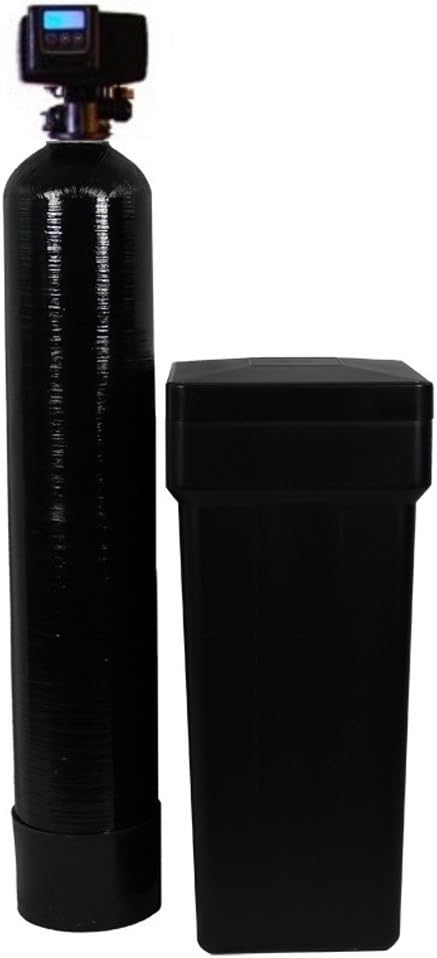
The Fleck 5600SXT is the workhorse of the water treatment industry — the same control valve used in systems that dealers sell at 3–5× the price. The 48,000 grain capacity handles Madison County's hardness levels for most households.
🛒 Check Price on Amazon → (affiliate)Frequently Asked Questions
What is the difference between a water softener and a water conditioner?
A water softener removes hardness minerals (calcium and magnesium) through ion exchange, resulting in measurably soft water. A water conditioner changes the crystalline structure of hardness minerals so they form less scale but does not remove them — hardness levels remain the same after conditioning.
Is a water conditioner as good as a water softener?
For scale prevention in moderate hardness water (below 12 GPG), a good conditioner provides some benefit. For North Alabama's 15–32 GPG hard water, and for anyone wanting skin, hair, eczema, or laundry benefits, a salt-based softener significantly outperforms any conditioner.
Do water conditioners work?
Quality TAC-based conditioners do reduce scale formation in pipes and appliances at moderate hardness levels. They are not a substitute for softeners when hardness is high, when salt-free is a hard requirement, or when skin benefits are a priority. The term "salt-free softener" used in marketing is technically misleading — conditioners do not soften water.
Which is better for North Alabama — water softener or conditioner?
For virtually all North Alabama households, a salt-based softener is the stronger choice. Madison County's hardness levels are too high for conditioners to fully address appliance scale, and only a softener delivers the skin and eczema benefits many families in this area need. See our full water softener guide for North Alabama-specific recommendations.