The Hard Water–Eczema Connection
Hard water contains high concentrations of dissolved calcium and magnesium. When this water contacts your skin, two things happen that directly worsen eczema. First, the minerals disrupt your skin's natural lipid barrier — the protective layer that keeps moisture in and irritants out. Second, hard water makes soap less effective, leaving behind soap scum residue on your skin that further strips the barrier.
Huntsville's municipal water ranges from 15–22 GPG depending on the source blend. Madison County well water runs as high as 32 GPG. For comparison, water above 7 GPG is considered hard. North Alabama is dealing with 2–4 times the threshold that dermatologists identify as problematic for sensitive skin.
The clinical evidence: A 2011 randomized controlled trial published in the Journal of Rheumatology found that children living in hard water areas had a 50% higher prevalence of eczema than those in soft water areas. A 2017 study from King's College London found that hard water at levels similar to Huntsville's (250–300 ppm) directly damages the skin barrier in healthy volunteers — before any eczema diagnosis is involved.
What a Water Softener Actually Does to Your Skin
A salt-based ion exchange softener removes calcium and magnesium from your water, replacing them with a small amount of sodium. The resulting soft water has a fundamentally different effect on skin — it rinses clean, doesn't leave mineral deposits, and allows your skin's natural oils to function normally.
Most North Alabama families with eczema report the following timeline after installing a softener: noticeable reduction in itching within 1–2 weeks, visible improvement in skin texture within 2–4 weeks, and meaningful reduction in flare-up frequency within 1–3 months. Results vary by severity of eczema and individual skin chemistry, but the pattern is consistent.
The mechanism matters: a softener doesn't treat eczema directly. It removes the environmental trigger that prevents your skin from healing. Once hard water is out of the equation, your skin barrier can rebuild and topical treatments become significantly more effective.
Is a Water Softener Enough, or Do You Need a Filter Too?
In Huntsville specifically, a softener alone addresses hardness but not chloramine — the disinfectant Huntsville Utilities switched to in 2021. Chloramine is a stronger skin irritant than chlorine for many people with eczema. If you've noticed that your symptoms worsened after 2021 or that your skin reacts even after softening, chloramine may be the remaining culprit.
The most complete solution for North Alabama eczema sufferers is a whole-home softener paired with a catalytic carbon filter (not standard carbon — it must be catalytic to address chloramine). The Aquasana Rhino with chloramine reduction handles both. Alternatively, a softener handles the hardness problem and covers the majority of cases.
Recommended Softeners for North Alabama Eczema
For Madison County's extreme hardness, you need a system sized for at least 48,000 grains. Undersized systems regenerate too frequently, wear out faster, and don't deliver consistently soft water.
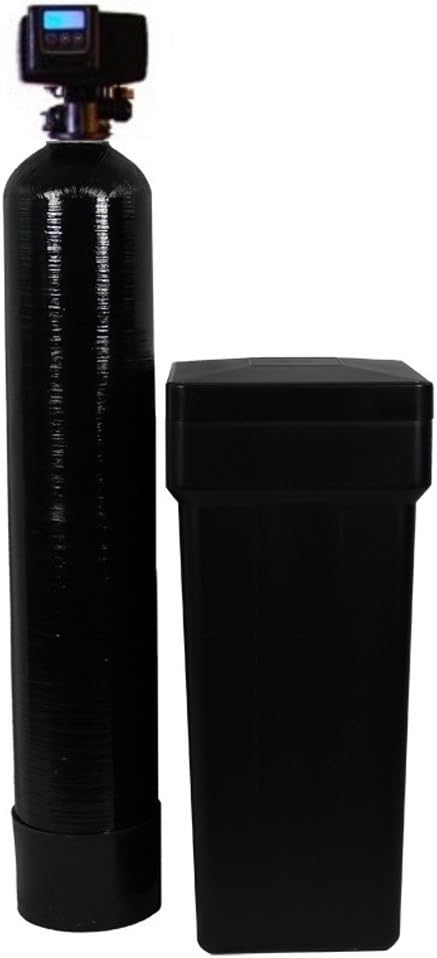
The Fleck 5600SXT control valve is the industry standard — reliable, repairable, and proven in North Alabama's hard water for decades. The 48,000 grain capacity handles Madison County's highest hardness levels for most households.
🛒 Check Price on Amazon → (affiliate)Frequently Asked Questions
Does a water softener help with eczema?
Yes — multiple clinical studies confirm that soft water reduces eczema severity and frequency, particularly in children. The mechanism is that soft water stops disrupting the skin's lipid barrier and allows topical treatments to work more effectively. Results typically appear within 2–4 weeks.
How long does it take for a water softener to help eczema?
Most people notice improvement within 2–4 weeks. Full improvement in skin barrier function typically takes 2–3 months. Children tend to see faster results than adults. The improvement continues as long as soft water is maintained — eczema often returns if the softener fails or runs out of salt.
Can hard water cause eczema?
Hard water doesn't cause eczema in people who don't have a genetic predisposition to it. But for the roughly 10–20% of people who are predisposed, hard water is one of the most significant environmental triggers. In North Alabama's extreme hardness levels, it's often the primary driver of chronic flare-ups that don't respond well to topical treatment alone.
Does a water softener help with eczema in children?
Children respond particularly well to soft water — their skin barrier is more sensitive to hard water damage, and the clinical research shows the strongest effect in pediatric eczema. The 2011 UK trial specifically found children in soft water areas had 50% lower eczema prevalence. If your child has eczema and you're on North Alabama city or well water, a softener is one of the highest-impact interventions you can make.
What grain capacity water softener do I need for North Alabama eczema?
For Madison County's 15–32 GPG hardness, a 48,000 grain system is the minimum for most households. For larger families (4+ people) or well water above 25 GPG, a 64,000 grain system is worth the additional investment. See our full softener guide for specific sizing recommendations.
Will a water softener help with skin rashes from hard water?
Yes — hard water skin rashes (sometimes called "hard water dermatitis") respond well to soft water. The rash is caused by calcium and magnesium deposits combined with soap residue irritating the skin. Soft water eliminates both irritants. Most people see the rash fade within 2–3 weeks of consistently bathing in soft water.
Bottom line for North Alabama: If you or your child has eczema and you haven't tested your water hardness, start there. A 48,000 grain softener addresses the primary trigger. If symptoms persist after softening, add catalytic carbon filtration to address Huntsville's chloramine. The combined cost of a softener ($549–$900) is typically less than a single year of prescription eczema treatments.