Affiliate Disclosure: We earn small commissions on purchases through links in this article at no extra cost to you. Full disclosure →
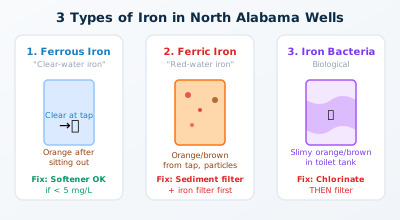
Iron is the fourth most abundant element in the Earth's crust. In North Alabama, where wells tap into iron-rich limestone and shale formations — particularly in Jackson, DeKalb, and Marshall counties — iron contamination is the norm, not the exception. The U.S. EPA's secondary maximum contaminant level for iron is 0.3 mg/L. Many North Alabama wells test at 1–5 mg/L or higher. But treating iron isn't as simple as "add a filter." There are three distinct types of iron in well water, and each requires a different treatment approach.
How to Tell Which Type of Iron You Have
Before you spend a dollar on treatment, identify your iron type. The wrong filter for the wrong iron type will fail within weeks and may void equipment warranties.
| Iron Type | How to Identify | Treatment |
|---|---|---|
| Ferrous (clear-water iron) | Water runs clear from tap, turns orange/rust after sitting out 10–30 min | Water softener (if <5 mg/L) or oxidizing filter |
| Ferric (red-water iron) | Water is visibly orange or brown directly from tap; particles settle in glass | Sediment filter + oxidizing iron filter |
| Iron bacteria | Slimy orange/brown buildup in toilet tank; "swampy" or musty smell; slippery pipe interiors | Chlorination + filtration (cannot be removed by filter alone) |
Important: Most homeowners have ferrous iron — the "invisible" type that looks clear at the tap. If you fill a white bucket with your well water and it's clear, then orange rust deposits appear after the water sits, that's ferrous iron. This type is treatable by a well-maintained water softener — but only if iron levels are below 5 mg/L. Above 5 mg/L, you need an iron filter regardless of type.
What Happens If You Don't Treat Iron in Your Well Water
- Rust stains everywhere: Sinks, toilets, bathtubs, and laundry all develop orange-brown staining that's extremely difficult to remove and gets worse over time.
- Metallic taste: Iron above 0.3 mg/L creates a noticeable metallic or "pennies" taste in drinking water and affects the flavor of coffee, tea, and ice.
- Softener resin destruction: This is the most expensive consequence most people don't know about. Iron coats water softener resin beads, rendering them unable to exchange ions. Iron above 1 mg/L will progressively destroy a softener's resin bed — potentially within 2–3 years — if an iron filter isn't installed upstream first.
- Pipe and appliance damage: Iron deposits build up inside pipes, water heaters, dishwashers, and washing machines — similar to hard water scale but with additional staining effects.
Manganese: The Less-Known Companion Problem
Wherever you find iron in North Alabama well water, manganese is usually present too. Manganese creates black staining rather than orange — you'll see it as dark deposits in toilet bowls, around drains, and on laundry. The EPA's secondary limit is 0.05 mg/L, but new health guidance suggests keeping manganese below 0.3 mg/L due to neurological concerns with long-term high exposure. Manganese is harder to remove than iron and requires an oxidizing filter rated for manganese specifically.
Signs of manganese: black or dark brown staining (vs. orange for iron), dark sediment in toilet tank, laundry with grayish-black stains. If your toilet tank has both orange and black deposits, you have both iron and manganese — which is common in Jackson and DeKalb county wells.
The Correct Treatment Order
For a North Alabama well with iron (and typically also hardness), the correct order of treatment equipment on your main water line is:
Standard Well Treatment Stack (most North Alabama wells):
Removes particles, protects downstream equipment
Oxidizes and removes dissolved iron/manganese before the softener
Removes hardness — now protected from iron fouling
Kills bacteria after filtration — installed after softener
For PFAS, nitrates, arsenic, and final drinking water polishing
Never install a softener before an iron filter if your iron is above 1 mg/L. Iron will foul the resin within months, requiring expensive resin replacement. This is one of the most costly mistakes well owners make, and it's entirely preventable.
Best Iron Filters for North Alabama Wells
For Iron + Manganese + Chlorine (Most Common Combination)
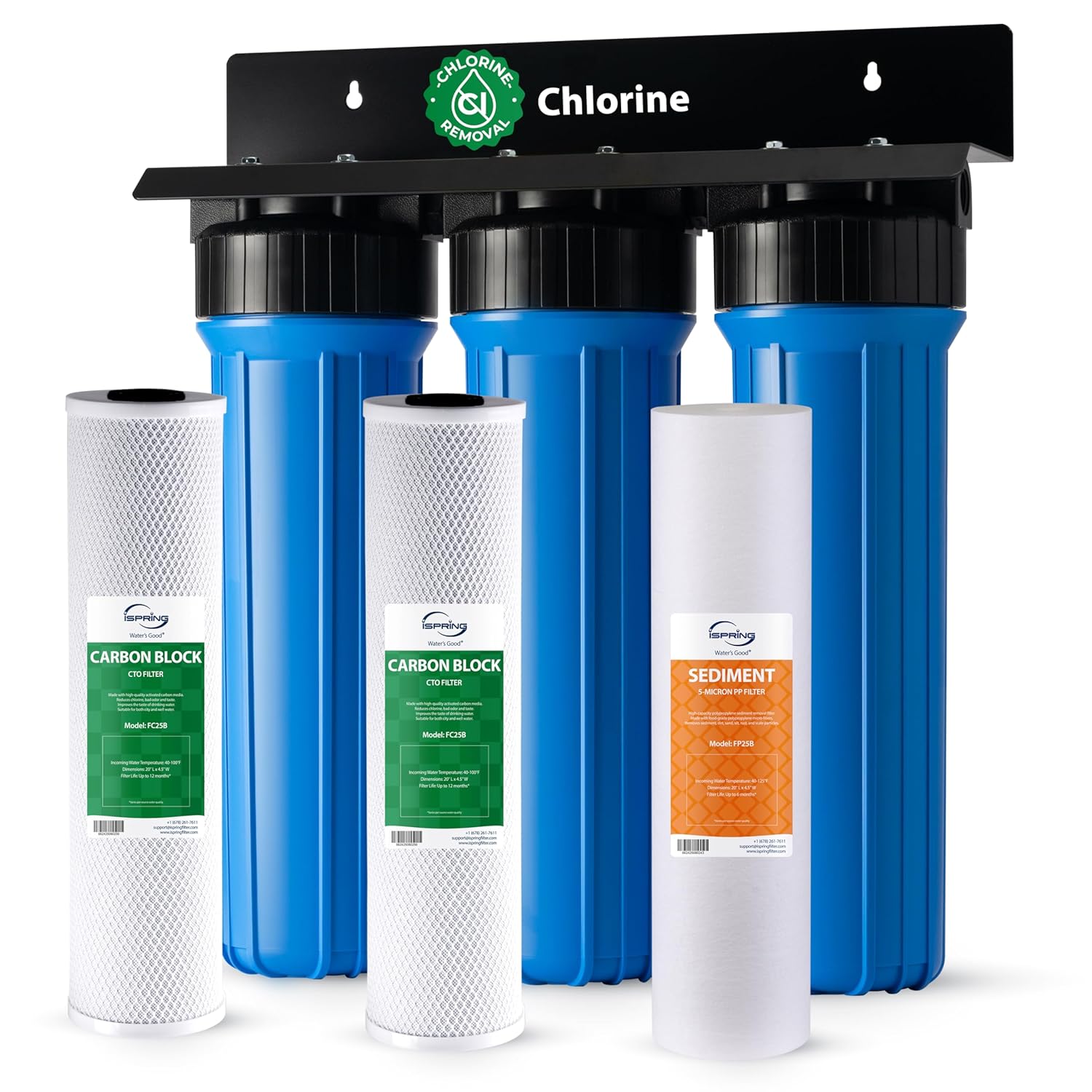
The iSpring WGB32BM is specifically designed for the iron/manganese combination common in North Alabama wells. The second-stage carbon block filter also handles chlorine if your well has been shock-chlorinated recently or if you're near a treated water source. It handles iron up to 3 mg/L and manganese up to 1 mg/L — covers the majority of North Alabama well conditions.
For High Iron (Above 3 mg/L) or Hydrogen Sulfide Smell
If your iron tests above 3 mg/L, or if you have the "rotten egg" hydrogen sulfide smell common in deeper Jackson and DeKalb county wells, you need an air injection oxidizing system (like Springwell's AIO) rather than a simple iron filter media. These systems inject air to oxidize dissolved iron and sulfur before filtration, handling much higher concentrations. These systems run $800–$1,500 but are the only practical solution at high iron levels.
How to Test Your Iron Level
A basic water hardness test strip will not show iron. You need a specific iron test — either a mail-in lab test (our recommendation for accuracy) or an inexpensive at-home iron test strip kit (~$15 on Amazon). For iron levels below 3 mg/L, a strip test will give you a useful ballpark number. For higher levels, or if you're buying equipment based on the result, use a certified lab.
See our well water testing guide for lab recommendations that include iron, manganese, and the full panel of North Alabama-relevant contaminants.