Affiliate Disclosure: We earn small commissions on purchases through links in this article at no extra cost to you. Our recommendations are fully independent. Full disclosure →
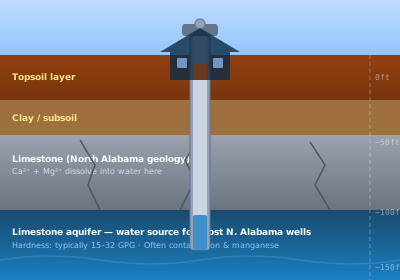
Private wells in Madison County are not monitored by any government agency. Unlike city water, which Huntsville Utilities tests hundreds of times per year, your well water is tested only when you test it. Given Madison County's geology and proximity to Redstone Arsenal, this is not something to skip.
How Many Madison County Homes Have Wells?
Approximately 18–22% of Madison County homes rely on private wells — primarily in rural areas of the county: Meridianville, Hazel Green, New Market, Gurley, and rural parts of Madison and Huntsville. If you're outside city water service areas, you almost certainly have a well.
What to Test For in Madison County Specifically
A basic coliform test isn't enough here. Based on Madison County's specific geology, agricultural activity, and documented contamination sources, a complete test panel should include:
| Test | Why Madison County Specifically | Priority |
|---|---|---|
| Coliform & E. coli | Baseline safety test — annual minimum | Critical |
| Hardness (GPG) | Madison wells reach 25–32 GPG — size your softener correctly | Critical |
| PFAS Panel | Redstone Arsenal legacy contamination detected in nearby wells | Critical |
| Nitrates | Agricultural runoff in rural Madison County — infant health concern | High |
| pH | Affects corrosiveness and filter performance | High |
| Iron & Manganese | Common in limestone aquifer — causes staining and affects softener resin | High |
| Arsenic | Naturally occurring in North Alabama geology | Moderate |
⚠️ Redstone Arsenal PFAS Warning: If your well is within 5–10 miles of Redstone Arsenal — which covers much of south and southeast Madison County — PFAS testing is not optional. The Army has documented PFAS contamination from legacy firefighting foam use, and some private wells in the area have tested above the EPA limit. Request the PFAS panel specifically — it's not included in standard well tests.
Where to Test Your Well Water in Madison County
Option 1: Auburn University Analytical Laboratories
Auburn's lab offers accredited water testing at some of the lowest prices in Alabama. Contact them at (334) 844-3974 or visit aces.edu/labs. They handle basic chemistry panels well, but call ahead to confirm PFAS panel availability as capabilities change.
Option 2: Tap Score (simplelabswater.com) — Mail-In
Our top recommendation for comprehensive testing. Their Essential Well Water Test (~$149) covers bacteria, hardness, metals, pH, and nitrates. Add the PFAS panel (~$50) for complete coverage. Results in 5–7 business days with clear plain-English explanations — not just numbers.
Option 3: ADPH Laboratories Division
The Alabama Department of Public Health offers certified testing, which is valuable if you need official documentation (real estate transactions, legal matters). Contact them at (334) 260-3460. Turnaround is typically 2–3 weeks.
How to Take a Proper Well Water Sample
- Use only the sterile container provided by the lab — never substitute
- Sample from a cold water tap closest to your pressure tank — not a filtered tap, not the kitchen if it has a filter
- Run cold water for 2 full minutes before sampling to flush standing water from pipes
- Do NOT collect water that has passed through a softener, filter, or aerator
- Fill the container without touching the inside — cap immediately
- Keep cold and deliver or ship within 24 hours of collection
- Test in spring (after heavy rains) AND in late summer (drought conditions) — Madison County well quality shifts seasonally
What to Do After Your Results
Once you have your results, the treatment approach depends on what's found:
- PFAS detected: Install an NSF/ANSI 58-certified under-sink RO system for all drinking and cooking water
- Hardness above 15 GPG: Install a high-capacity water softener (48,000+ grain) — get sized based on your actual GPG reading
- Iron above 1 mg/L: Install an iron filter before the softener — iron destroys softener resin quickly
- Bacteria detected: Shock chlorinate the well immediately, retest in 2 weeks, then install UV disinfection
- Nitrates above 10 mg/L: Do not give to infants — install RO system for drinking water immediately
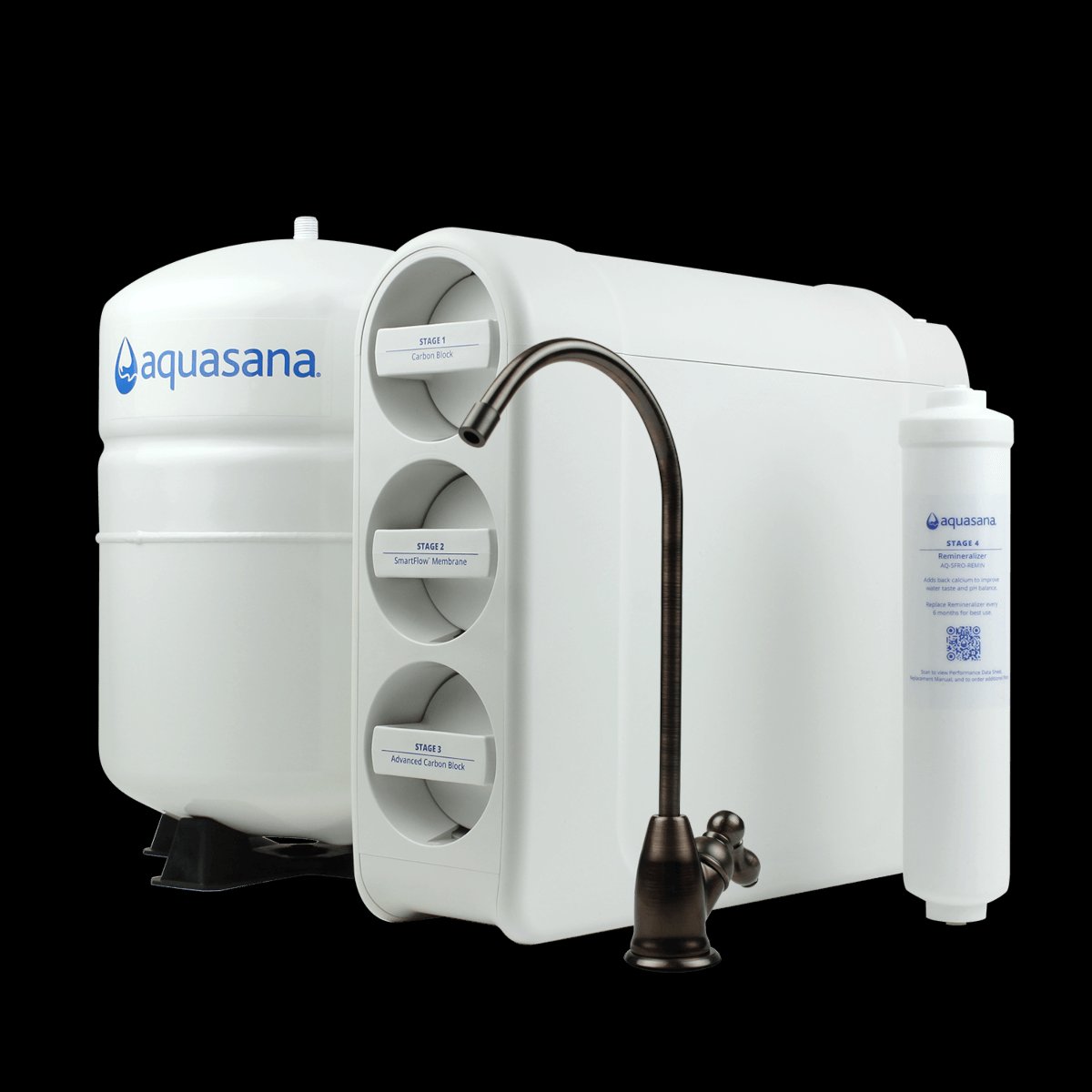 🚰 Aquasana OptimH2O RO — Best for PFAS & Nitrates (affiliate)