Affiliate Disclosure: We earn small commissions on purchases through links in this article at no extra cost to you. Full disclosure →
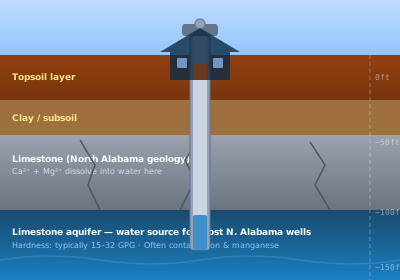
The short answer: Most North Alabama well water is safe to drink — but "most" and "probably" are not the same as "definitely." Private wells are unregulated and untested unless the homeowner tests them. Given what we know about North Alabama's specific geology, agricultural patterns, and industrial history, testing is not optional — it's the only way to know.
The Fundamental Difference: Private vs. City Water
Huntsville Utilities tests their municipal water supply hundreds of times per year and publishes annual Consumer Confidence Reports. If something is wrong with city water, there's a regulatory system designed to catch it. Private wells have none of that. Your well water is not regulated by the EPA, not monitored by the state, and not tested unless you pay for testing. It could have changed significantly since you last tested it — or since you bought the house — and you would have no way of knowing.
What's Most Commonly Found in North Alabama Wells
Based on testing data from the Alabama Department of Environmental Management, the Auburn University water testing lab, and our own aggregation of homeowner test results, here's what North Alabama wells most commonly contain:
| Contaminant | How Common | Risk Level | Most Affected Areas |
|---|---|---|---|
| Hardness (Calcium/Magnesium) | Nearly universal | Low health risk, high damage risk | All counties |
| Iron & Manganese | Very common | Moderate (staining, taste, damage) | Jackson, DeKalb, Marshall |
| Coliform Bacteria | Common in older wells | High (immediate health risk) | Rural areas, older casings |
| Nitrates | Moderate in farm areas | High for infants | Limestone, Morgan, rural Madison |
| PFAS | Elevated near Arsenal | High (long-term exposure) | South/SE Madison County |
| Arsenic | Present in some areas | Moderate-High | Varies by local geology |
| Hydrogen Sulfide (sulfur smell) | Common in deeper wells | Low-Moderate | Jackson, DeKalb |
The Redstone Arsenal PFAS Risk
⚠️ If your well is within 10 miles of Redstone Arsenal: PFAS testing is not optional. The U.S. Army has documented PFAS contamination from legacy use of firefighting foam (AFFF) at Arsenal facilities. Some private wells in south and southeast Madison County — including areas of Meridianville, Hazel Green, and rural south Huntsville — have tested above the EPA's new 4 parts-per-trillion limit. This is cumulative exposure risk, not an emergency, but it requires an RO system for drinking water if detected.
Bacteria: The Most Urgent Risk
Of all the things found in North Alabama wells, bacteria is the one that can make you acutely ill — sometimes severely. Total coliform bacteria indicate that surface water or soil is reaching your well, which can also introduce E. coli and other pathogens. Sources include: aging well casings with cracks, improper well caps, nearby septic systems, flooding events, and agricultural runoff. If your well hasn't been tested for bacteria in the past year, it needs to be. Testing is inexpensive — around $25–$50 at most labs.
Signs that may indicate bacteria contamination include: gastrointestinal illness that clears up when you drink bottled water, cloudy or murky well water after rain, a new or changing sulfur smell, or a well casing that has been submerged during flooding. Any of these warrants immediate testing and well shock chlorination while you await results.
Nitrates: Especially Important for Families with Infants
Nitrates come from fertilizer runoff and are most prevalent in agricultural areas — particularly Limestone County (row crops), Morgan County, and rural Madison County. The EPA limit is 10 mg/L. Above that limit, nitrates cause "blue baby syndrome" (methemoglobinemia) in infants under 6 months by interfering with their blood's ability to carry oxygen. Adults and older children face much lower risk. If you have an infant or are pregnant and using well water, nitrate testing is critical. If levels are above 10 mg/L, use an RO system or bottled water for the baby and for formula preparation.
How to Know If Your Well Water Is Safe
There is only one way: test it. The EPA recommends annual testing for bacteria at minimum, with a more comprehensive panel every 3–5 years or whenever you notice changes in taste, smell, or color. For North Alabama specifically, we recommend testing for: coliform bacteria, nitrates, hardness, iron, manganese, pH, arsenic, and PFAS (especially near the Arsenal).
For a full guide to testing options including local labs, mail-in services, and how to take a proper sample, see our Madison County Well Water Testing Guide and our general North Alabama water testing guide.
Treatment Recommendations by What You Find
- Bacteria detected: Shock chlorinate immediately. Install UV disinfection system after remediation.
- PFAS detected: Install NSF/ANSI 58-certified under-sink RO for all drinking and cooking water.
- Hardness above 15 GPG: Install 48,000+ grain water softener.
- Iron above 1 mg/L: Install iron filter before the softener — iron destroys softener resin.
- Nitrates above 10 mg/L: RO system for drinking water immediately if infants present.
- Sulfur smell: Air injection oxidizing filter or aeration system.
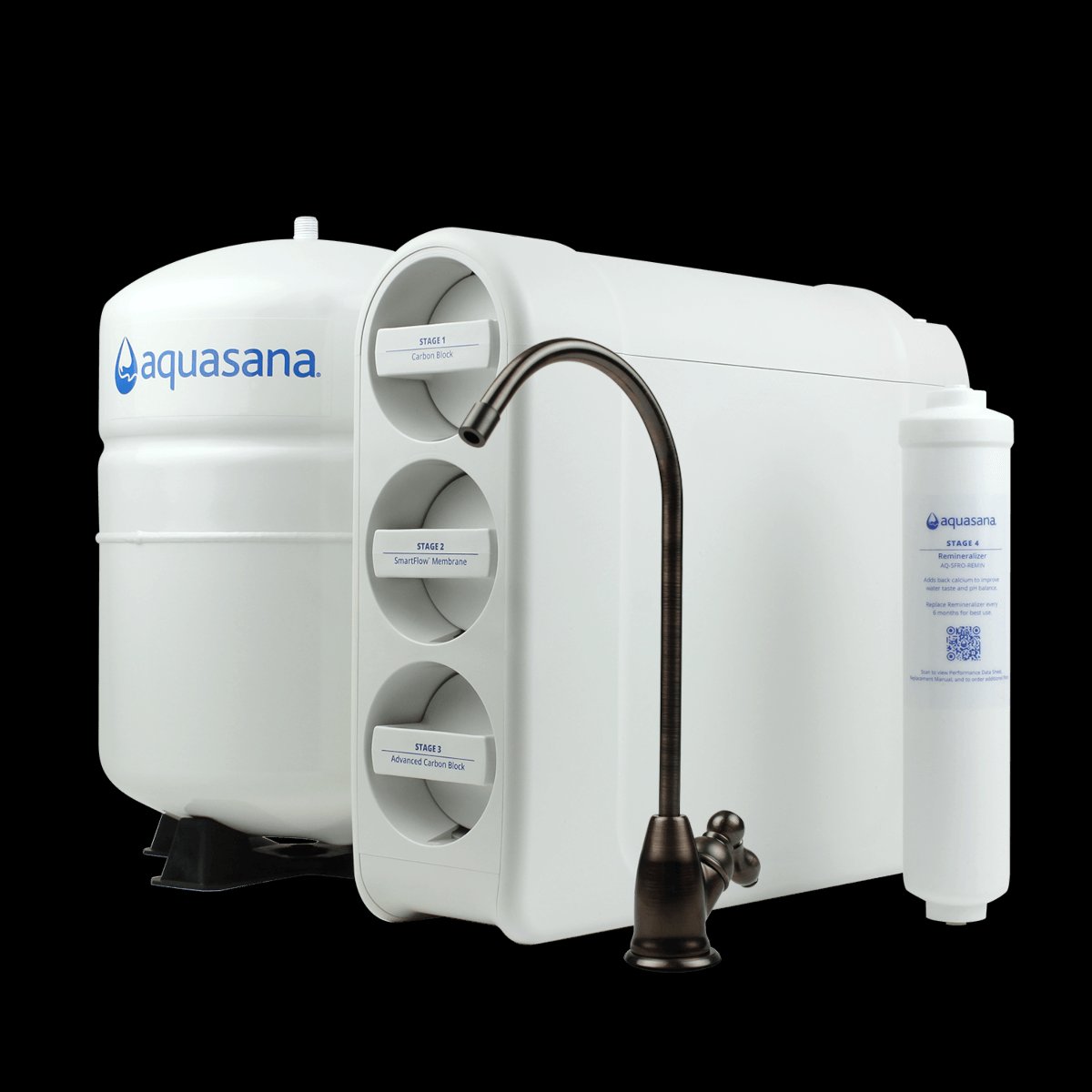 🚰 Aquasana OptimH2O RO — Best for PFAS & Nitrates (affiliate)