The Basics: What Is a Tankless Water Heater?
A tankless (on-demand) water heater heats water directly as it flows through the unit, rather than storing hot water in a tank. When you turn on the hot tap, cold water enters the unit and is heated by either gas burners or electric elements before it reaches your faucet. No tank means no standby heat loss — the energy that traditional tank heaters waste keeping 40–80 gallons of water hot 24 hours a day.
Pros of Tankless Water Heaters
Endless hot water
The most common reason homeowners upgrade. A properly sized tankless unit never runs out of hot water — as long as you don't exceed its flow rate. For a family of four in Huntsville, a gas unit rated at 8–10 GPM (gallons per minute) handles simultaneous shower and dishwasher use comfortably.
Lower energy bills
The U.S. Department of Energy estimates tankless water heaters are 24–34% more energy efficient than storage tank heaters for homes using 41 gallons or less of hot water daily. For larger households (86+ gallons/day), the efficiency advantage narrows to about 8–14%. For most Huntsville families, the real-world savings run $100–$250 per year on gas or electric bills.
Longer lifespan
Properly maintained tankless units last 20+ years. A traditional tank heater lasts 8–12 years. In dollar terms, a tankless unit's higher upfront cost is offset by not replacing a tank heater twice over the same period.
Space savings
Tankless units mount on a wall and are roughly the size of a carry-on suitcase. For Huntsville's newer construction with smaller utility closets, or older homes with cramped water heater locations, the space savings are meaningful.
Cons of Tankless Water Heaters — Including the One That Matters Most in North Alabama
Higher upfront cost
A quality gas tankless unit (Rinnai, Navien, Noritz) runs $900–$1,500 for the unit alone. Professional installation in the Huntsville area adds $500–$1,500 depending on whether gas line upgrades or venting changes are needed. Total installed cost: $1,400–$3,000. A tank heater replacement runs $600–$1,200 installed.
Flow rate limits
Tankless units have a maximum flow rate (GPM). Running two showers simultaneously while the dishwasher runs can exceed some units' capacity, resulting in lukewarm water. This is a sizing issue — undersized units are the most common installer mistake. Always size for your peak simultaneous demand, not average use.
Cold water sandwich
A minor but real quirk: if you use hot water briefly, turn it off, then turn it on again quickly, you may get a burst of cold water before hot arrives. This happens because residual hot water in the pipes is followed by unheated water before the burners fully engage. Most people adapt quickly.
Hard water scale — the critical issue for North Alabama
This is the issue most tankless water heater salespeople in Huntsville won't lead with. Hard water causes calcium and magnesium to precipitate out of solution when heated — and a tankless heat exchanger reaches temperatures that dramatically accelerate this process. In North Alabama's 15–32 GPG water, scale builds up inside the heat exchanger within months of installation.
The consequences are progressive: reduced flow rate, higher energy consumption as the unit works harder, error codes requiring service calls, and ultimately heat exchanger failure. Rinnai, Navien, and most major manufacturers specify maximum hardness limits — typically 11 GPG — in their installation guidelines. Above that, a water softener is required to maintain the warranty.
North Alabama well water commonly tests at 15–32 GPG — well above the 11 GPG manufacturer threshold. Madison County city water at 4.7 GPG is soft and does not pose a scale risk. However, if you are on a private well in Madison, Limestone, or Morgan County, your water is almost certainly above the threshold. Installing a tankless heater on hard well water without a softener upstream is not a question of if it will fail prematurely — it's a question of when.
Real-world timeline without a softener: Year 1–2: unit functions normally. Year 2–3: first efficiency loss and minor error codes. Year 3–5: significant scale buildup, frequent service calls, $200–$400/year in descaling maintenance. Year 5–7: heat exchanger failure, requiring $800–$1,500 replacement or full unit replacement. With a softener upstream: 20+ year lifespan with only annual maintenance descaling.
The Right Setup for North Alabama: Softener + Tankless
The correct approach for Huntsville and Madison County is to install a whole-home water softener upstream of your tankless water heater. The softener removes the calcium and magnesium before water enters the unit, eliminating the scale problem entirely. The tankless heater then delivers on its full promise — 20+ year lifespan, consistent efficiency, and endless hot water.
Budget for both together when planning. A 48,000 grain softener (~$549 DIY or $900–$1,200 installed) paired with a quality gas tankless unit (~$1,500–$3,000 installed) gives you a complete system that outperforms both components separately over a 20-year horizon.
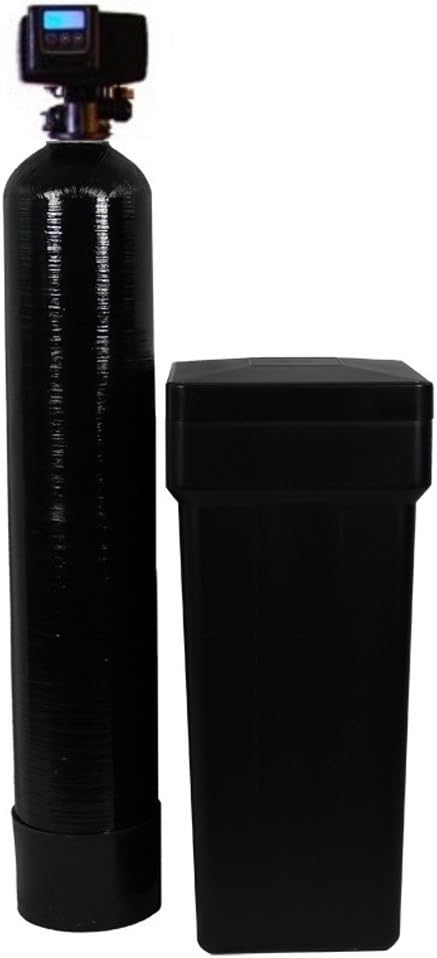
Install upstream of your tankless heater. Removes the calcium and magnesium that destroys heat exchangers in North Alabama's hard water. This is the investment that makes your tankless heater last 20 years instead of 5.
🛒 Check Price on Amazon → (affiliate)Is a Tankless Water Heater Worth It in North Alabama?
Yes — with the softener. Without the softener, you're spending $1,500–$3,000 on a system that will fail in 3–7 years, costing you more than a simple tank replacement would have. With the softener, a tankless unit is genuinely the superior long-term choice: lower operating costs, no running out of hot water, and a 20+ year lifespan.
If you're currently shopping for a tankless water heater in Huntsville or Madison County, factor in the softener cost from the beginning. Get both installed at the same time if possible — many plumbers can coordinate both installations.
Frequently Asked Questions
What are the pros and cons of a tankless water heater?
Pros: endless hot water, 20–34% energy savings, 20+ year lifespan, wall-mount space savings. Cons: $1,400–$3,000 installed cost, flow rate limits for simultaneous high demand, cold water sandwich effect, and in North Alabama specifically — rapid scale damage without a water softener upstream.
Do I need a water softener with a tankless water heater in North Alabama?
Yes — strongly recommended, and required by most manufacturers to maintain warranty. North Alabama's 15–32 GPG hardness is 1.5–3× above the maximum hardness most tankless manufacturers specify. Install the softener first.
How long do tankless water heaters last in hard water?
Without softener: 3–7 years before significant efficiency loss or failure. With softener: 20+ years as rated by the manufacturer.
What size tankless water heater do I need for a North Alabama home?
For a 3-bedroom Huntsville home with 2–3 bathrooms: a gas unit rated at 8–10 GPM. For 4+ bathrooms or simultaneous high demand: 10–12 GPM. Ground source water temperature in North Alabama averages 60–65°F, so the unit needs to raise incoming water 80–95°F to reach 140–160°F output — size for that temperature rise at your peak flow rate.